Beloved conservationist and anthropologist Jane Goodall was famous for having said: “What you do makes a difference, and you have to decide what kind of difference you want to make.”
It can often feel like as individuals we have very little power to bring about change amid the many daunting challenges the planet is facing: Climate change, massive biodiversity loss, suffocating plastic pollution, deforestation of the Amazon, development of previously protected natural spaces for yet more oil drilling–these are just a few examples of the destruction the planet is experiencing at the hands of humans. It can be a lot for one person to process on a daily basis.
But Goodall, a trailblazer on many levels, was legendary for her unflinching optimism even amid the myriad challenges impacting the Earth. She was a consistent ray of light and hope.
As a frequent traveler and global citizen, I always try to keep Goodall’s words and worldview in mind and live by them as much as possible. This is true when I'm home and also when I’m in far-flung places and come across issues that concern me–whether it's at a hotel, resort, airport, restaurant, rest stop or some other location I happen to be visiting or passing through.
Living by Goodall’s words, for me as a traveler, means that in addition to doing things like always having a reusable water bottle with me and finding other ways to leave no trace, I politely speak up if there’s a chance I might be able to bring about positive change and help to create a more sustainable travel industry. It's an effort we all have a responsibility to take part in.
Most recently, I put this habit to use during a stay at an Aloft hotel in Fort Lauderdale, Florida (a brand owned by Marriott International, the world's largest hospitality company). Over the course of my stay, I was truly discouraged and shocked to find that it was impossible to get a meal served on anything other than a plastic plate with plastic utensils. What's more, single-use plastics were everywhere in the hotel, from guest rooms to the snack bar in the lobby.

Meals at an Aloft hotel in Florida served on plastic plates with plastic utensils. (Photo Credit: Photo by Mia Taylor)
It was frustrating and deeply disappointing that a hotel would still be boldly relying upon single-use plastics everywhere, particularly after years of splashy pronouncements and promises from global hotel operators, and the travel industry in general, about efforts to be more eco-friendly and mindful of the planet. (Those announcements include Marriott's own promises to reduce its reliance on single-use plastics.)
Just because the current government in Washington D.C. has decided that plastic straws are somehow no longer harmful (which is entirely inaccurate and absurd) and has no interest in protecting the planet, it doesn’t mean that travel industry companies and brands should lessen or abandon their own efforts to be responsible stewards of the planet.
The industry’s progress on this front is just as critical now as it was when the COVID-19 pandemic emerged and laid bare how much damage humans are doing to the Earth and its ecosystems.
What's more, travelers themselves have said they want more sustainable travel options in survey after survey.
But more than that, we are the adults in the room and we owe it to our children to leave them a healthy, livable planet. Single-use plastics are not only harmful to the environment, they’re harmful to human health. According to the Earth Day website “from production to disposal, plastics wreak havoc on human, plant, and animal health and cause immense amounts of waste in our ecosystems, clogging our land, air, and waterways.”
The website goes on to add that plastic pollution in particular “poses a serious threat to all life on Earth because of the toxic nature of the chemical additives used during the production process,” adding that research shows "plastics are able to enter into the human bloodstream, permanently residing in our bodies until the day we die."
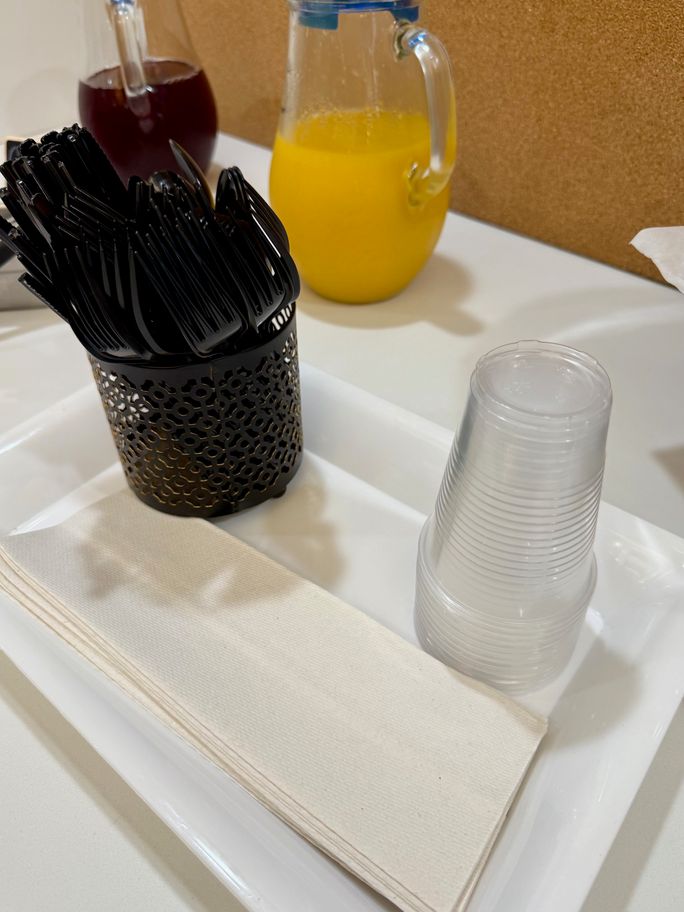
Single-use plastics are being used everywhere at an Aloft hotel in Florida. (Photo Credit: Photo by Mia Taylor)
Looking just at plastic utensils for a moment, these may seem small and harmless. Often people don’t even give a second thought to using them when provided by restaurants or other venues. But plastic utensils can take hundreds of years to decompose in the environment. “In the United States alone, billions of plastic spoons end up in the trash every year, exacerbating the critical problem of plastic pollution,” according to the company Emerald Evocations, a leading educator when it comes to renewable materials.
Our oceans are being inundated with plastic waste and it impacts both marine life and ecosystems. In addition, the use of plastic tableware has been linked to the increased likelihood of plastic particles being ingested by humans.
As a two-time cancer patient, I take these kinds of findings seriously. I also take them seriously as a mom who wants my son to have a fighting chance of having a healthy life.
Studies like these inspire me to take action whenever I can, including as a traveler. In the case of the Aloft hotel, I sat down and wrote a polite email to the hotel’s manager, explaining how disappointed I was by the property’s heavy reliance on single-use plastics. I also explained that because of this, I would no longer stay at Aloft hotels.
When I hit send on that email, I was not confident I'd get a response. But I was confident I did the right thing by explaining my feelings and drawing attention to the issue. Countless innovative companies have come up with eco-friendly alternatives to single-use plastics. For starters, compostable biodegradable utensils are widely available these days. So, there is no excuse for continuing to rely on plastic utensils.
To the hotel’s credit, I did get a reply. About a week later I received an email from a hotel representative explaining that they took my feedback seriously and were looking into ways to make changes. I hope the response was sincere and they do take action, because the time for getting control of this issue is long overdue.
Not long after the Aloft incident, I flew to Turks and Caicos in the Caribbean, where the importance of the issue became even more apparent to me. During my visit, I couldn’t help but notice the plastic waste on some of the beaches I explored. Turks and Caicos is known for its beautiful, white sand beaches with crystal clear turquoise water. Yet here too, the detrimental impact of humans and our plastic waste was obvious.
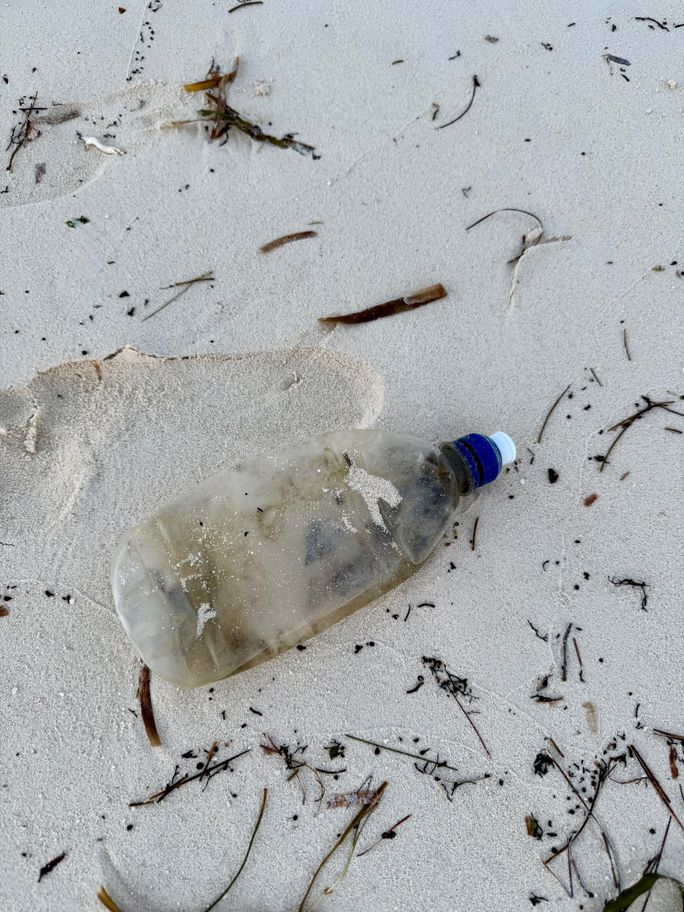
Plastic pollution on a beach in Turks and Caicos. (Photo Credit: Photo by Mia Taylor)
On yet another occasion during my visit, I was sitting outside at lunch when a heron flew above me with plastic wrapped around its foot. The plastic was trailing through the air behind it as the bird passed overhead.
To be fair, this is not a problem caused by anyone in Turks and Caicos. This is a global problem brought about by the human race, particularly industrialized nations. And the problem is now washing up on the shores of the many small countries across the Caribbean that bear the brunt of the industrialized world’s activities.
Once again, I thought of a comment I’d heard Goodall make repeatedly over the years when being interviewed for podcasts or magazines. She was famous for saying that humans are “without question, the most intellectual creatures to ever walk the planet.” But, she added, “we are not intelligent, because intelligent creatures don't destroy their only home.”
But then I reminded myself: Each one of us can make a difference. We can each take actions to help bring about change, standing up to the oil industry, which is behind the continued production and proliferation of plastic products.
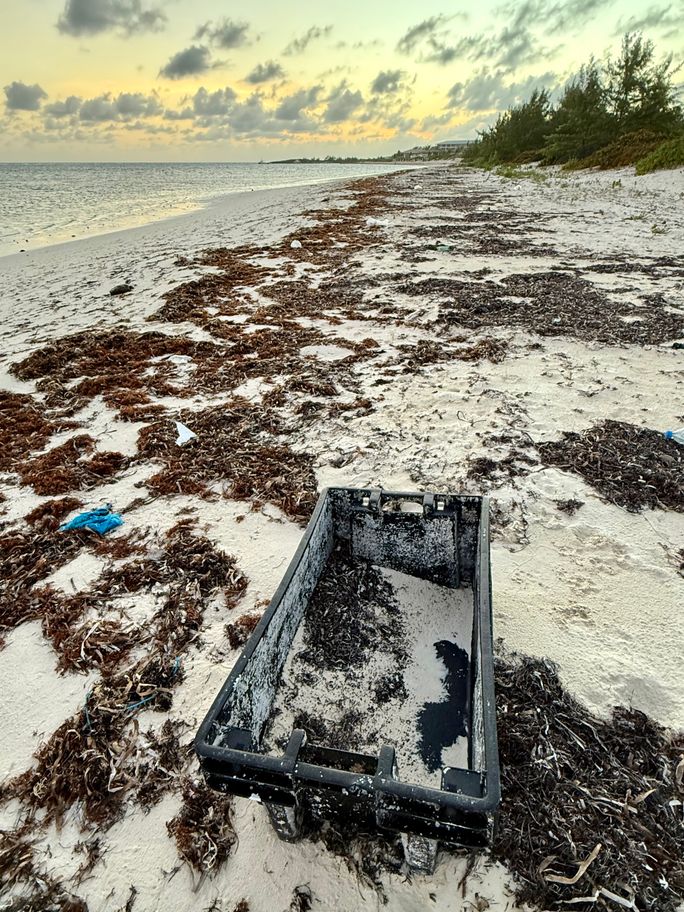
Platic waste on a beach in Turks and Caicos (Photo Credit: Photo by Mia Taylor)
In this case, I decided to speak with a staff member at the resort where I was staying. I suggested the possibility that guests could volunteer to engage in beach cleanups and that I’d be happy to be the first guest to do so. After chatting for awhile, the resort employee, who was in charge of sustainability, said he would start putting buckets out with signage explaining to guests that they can use the buckets to help gather plastic from the beach. An effort that will at least help prevent marine animals from ingesting the plastic and dying.
These are just two small-scale, local examples of how travelers might take steps to help bring about change. The key point and takeaway is that your voice, your actions and your observations matter and can help. It may feel intimidating or uncomfortable at first. But as Goodall said, we can all make a difference, and you have to decide what kind of difference you want make.
Another icon, Robert F. Kennedy, also believed in the power of the individual, famously stating during a speech in 1966: “Each time a man stands up for an ideal, or acts to improve the lot of others, or strikes out against injustice, he sends forth a tiny ripple of hope, and crossing each other from a million different centers of energy and daring those ripples build a current which can sweep down the mightiest walls.”
We can all send out ripples. Whether it’s by politely starting conversations or sending an email to express your concerns. Send that ripple of change into the world to help the travel industry do better at protecting the planet and those of us who live here.
For the latest travel news, updates and deals, subscribe to the daily TravelPulse newsletter.


